FILMHAUS · FILM CRITICISM

2026 CRITICAL REVIEWS

FilmHaus critical writing on selected films and screenplays from the 2026 Official Selection.

SNOW DOG
★★★½

SNOW DOG

Christina Park and Marisol Salazar Montoya

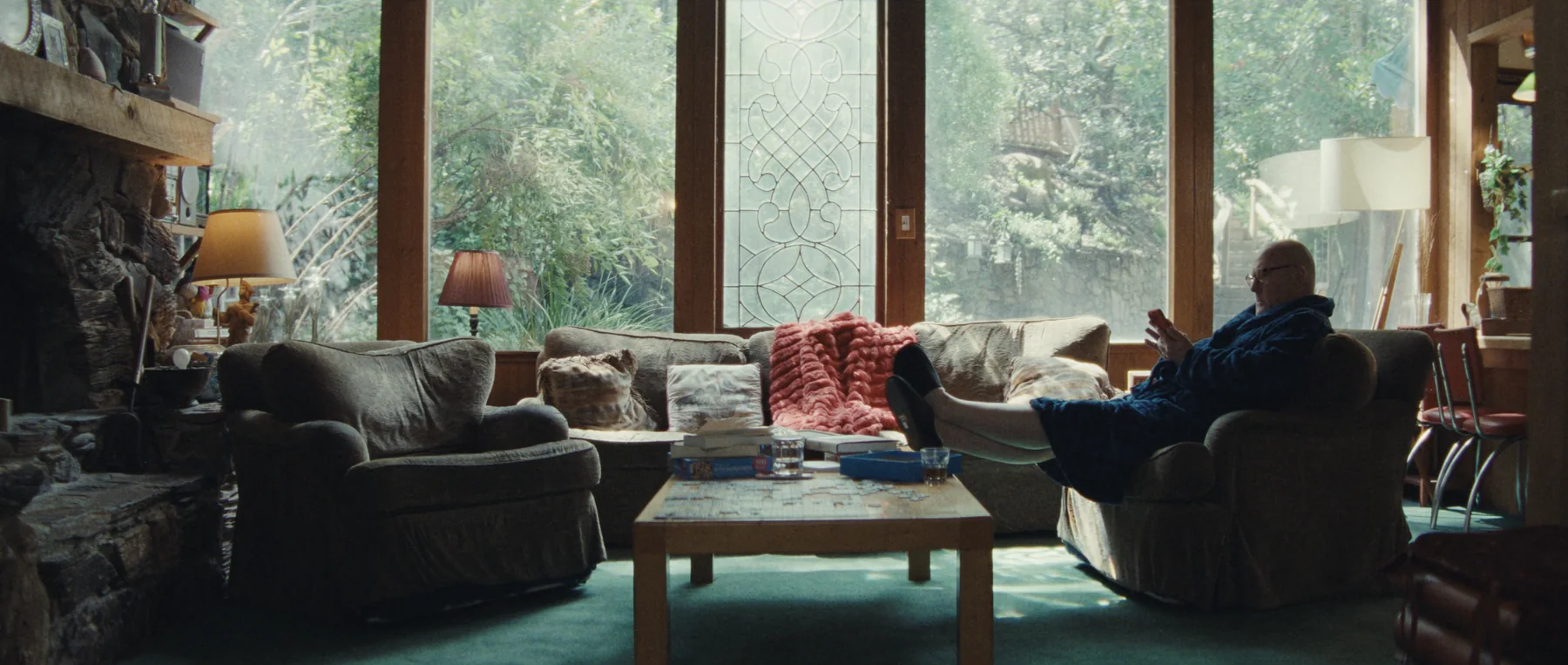
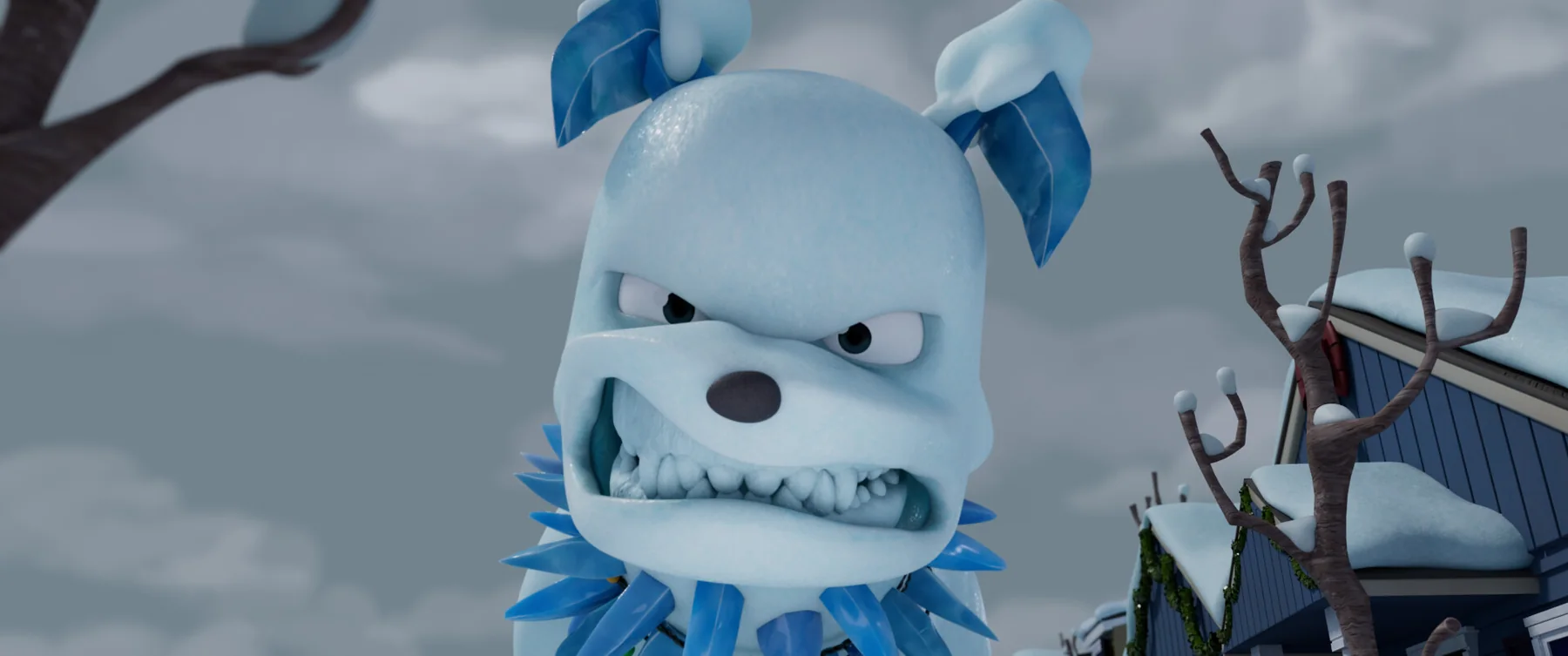
Oscar Wilde warned that life holds only two tragedies: not getting what one wants, and getting it. Ten-year-old Holly manages both before Christmas is out. She unwraps a pet rock, the seventies novelty sold as the pet that needs nothing, then storms into the garden and sculpts the dog she actually wanted. As snow has done in animation ever since The Snowman (1982, Dianne Jackson), it wakes up. What follows is a pocket-sized treatise on desire and its aftercare. Snowbert is Freud's "omnipotence of thoughts" with a wagging tail, the infantile conviction that wishing makes it so. He is also Winnicott's transitional object turned upside down: Winnicott's beloved object earns its reality by surviving the child's destructiveness, whereas Holly's creation outgrows her control, and she must be the one to end it. Every Pygmalion, it turns out, eventually wakes up a Frankenstein. Hans Jonas's imperative of responsibility, the idea that our duty to what we create grows with our power to create it, has surely never been taught by a ball of snow. In a culture of next-day delivery and impulse adoption, "a dog is for life, not just for Christmas" has rarely felt more pointed.
Read Full Review
HOTEL PURGATORIO
★★★★

HOTEL PURGATORIO

Joey Agbayani

Each year at Undas, cemeteries across the Philippines become candlelit townships where families keep vigil beside their dead, praying them a little further along the road out of purgatory. Joey Agbayani's Hotel Purgatorio turns that gentle theology inside out. The medieval Church sold indulgences to shorten one's stay in the middle realm; Agbayani's sly conceit is to reverse the transaction. John Torre arrives in the lobby with no memory of his name and is promptly told that, as a special guest, "the rooms are free of charge." The faithful once paid to leave purgatory; John is invited to stay for nothing. Byung-Chul Han calls ours a palliative society, so afraid of pain that every discomfort must be soothed away before it can teach us anything, and Agbayani's hotel is that society rendered as architecture, a place of endless consolation where nothing ever has to hurt, and therefore nothing can ever heal.
Read Full Review
RON'S NIGHT OUT
★★★★

RON'S NIGHT OUT

Jenna Covarrubias

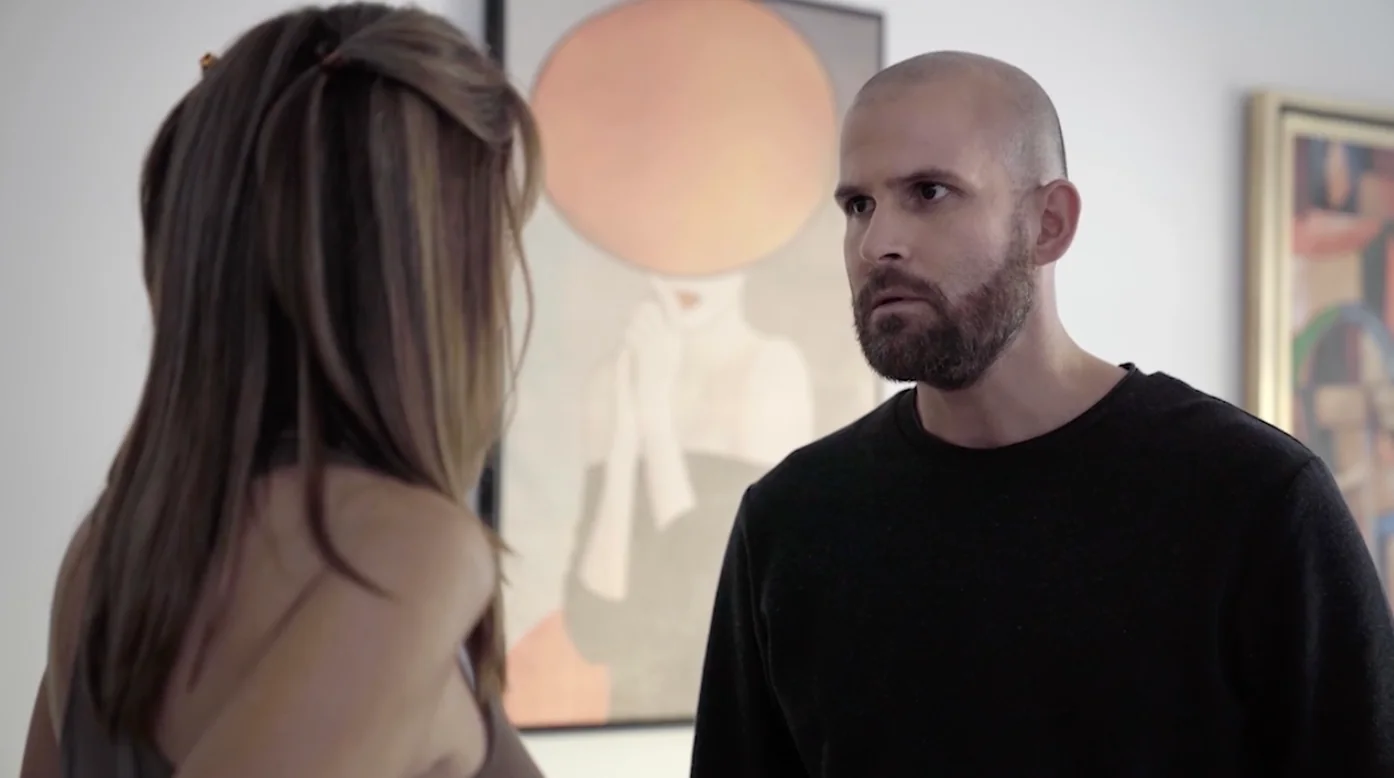
Off the coral reefs of the Indo-Pacific, the clownfish makes its home inside the sea anemone, nestling among tentacles that would paralyse any other fish, protected by nothing more than a thin coat of mucus and an unwavering faith that the thing embracing it will not sting. Jenna Covarrubias hands us this image by way of a glorious slip of the tongue, when Ron, the lonely fifty-something at the heart of Ron's Night Out, asks his date whether she had suspected him of being a "clownfish". He means catfish, naturally; she tells him she likes his version better, and by the end of these thirteen breathless minutes, so do we. Covarrubias, who writes as well as directs, opens on a self-help voice assuring its listener that admitting you are tired does not make you any less of a man, then pulls up a chair for us at a diner table where Ron (Timothy Durkin) is joined by a woman who arrives late, apologetic and sparkling, blaming the traffic and an accident on the way in: "Everyone's okay, luckily." Let me say it plainly and at the outset: the cinematography is impeccable, every frame composed with a poise that lets the comedy breathe whilst dread pools quietly in the corners; the direction is assured to the point of cheek, never once tipping its hand; and the performances are pitched with a precision that most features would envy. Durkin gives us a man in perpetual apology, a middle-school vice principal who retracts his own jokes the instant he makes them ("No, I'm kidding"), and whose gratitude for being dragged out of the house is so naked it almost hurts to watch. Opposite him, his date is played with a quicksilver warmth so generous that it becomes, in hindsight, a question in itself. It is the most tender lonely-hearts duet I have seen since Marty (1955, Delbert Mann), right up until the film decides, with a devilish grin, that it would rather be something else entirely. Beneath its sitcom-bright surface, Ron's Night Out is a quietly devastating study of what we might call the masculine crisis of disclosure, and it could hardly be more of its moment. In 2023 the US Surgeon General declared loneliness an epidemic, and the film's opening sermon (honesty is where real strength lives; growth rarely feels heroic) belongs to the booming therapeutic marketplace that Eva Illouz has diagnosed as emotional capitalism, in which intimacy is coached, packaged and sold back to the very men it has starved, the same transactional romance that Materialists (2025, Celine Song) dissects with actuarial precision. Covarrubias then proceeds, with exquisite irony, to stage a date in which nobody is being entirely honest, and the film's true leitmotif surfaces as a single, overworked word: okay. "You're okay. You're okay. I'm fine." "Everyone's okay, luckily." "That's okay." "Are you sure everything's okay?" Repeated like a rosary, it becomes what Roman Jakobson would call a phatic utterance and what Erving Goffman would recognise as front-stage impression management, a lacquer of reassurance laid over a back stage the film keeps tantalisingly locked. Ron's grief, meanwhile, belongs to the category the psychologist Pauline Boss termed ambiguous loss: a mourning without a corpse. When his date offers condolences for his late wife, the correction is a masterclass in comic deflation (she is very much alive, having left him for her karate instructor), yet the gag lands precisely because it exposes the Freudian chasm between mourning, which completes its work, and melancholia, which cannot, since the lost object is still out there, presumably perfecting her roundhouse kick. Add the film's Lacanian undertow, its sly intuition that there is no such thing as a sexual relationship, only the fantasies two strangers project at one another across a plate of pancakes, and you have a short that interrogates masculinity, desire and the dramaturgy of the first date with a rigour that never once forgets to be funny. Stylistically, Covarrubias works in the grand tradition of the diner as pressure cooker, that most American of confessionals, where Pumpkin and Honey Bunny plot their stick-up over coffee in Pulp Fiction (1994, Quentin Tarantino) and where the women of Death Proof (2007, Quentin Tarantino) trade stories, blissfully unaware of the stuntman and his car. Her register, though, sits closer to the deadpan of Fargo (1996, Joel Coen), all good manners and lethal undercurrent, and to Something Wild (1986, Jonathan Demme), in which a buttoned-up man is swept out of a diner by a woman who, like Ron's date, simply felt like being spontaneous. The genre she most gleefully raids is the predatory-date thriller, and here she performs a genuinely canny act of inversion. Where Fresh (2022, Mimi Cave) and Drop (2025, Christopher Landon) seat a woman across the table from danger, Ron's Night Out swims in the same waters as Audition (1999, Takashi Miike), with its lonely widower auditioning a future wife, Under the Skin (2013, Jonathan Glazer), with its unhurried pick-ups of solitary men, and, more recently, Strange Darling (2023, JT Mollner) and Companion (2025, Drew Hancock), both of which take wicked delight in reshuffling who exactly is prey. Carol J. Clover's theory of cross-gender identification, in which horror asks us to ride along with its most vulnerable body, is here applied, deliciously, to a man in his fifties, whilst Barbara Creed's monstrous-feminine hovers somewhere just beyond the edge of the frame. And in Ron himself there is something of Tim Robinson's agonisingly needy everyman in Friendship (2024, Andrew DeYoung) and Nicolas Cage's bewildered nobody in Dream Scenario (2023, Kristoffer Borgli), men whose desperation to be liked is both their charm and their undoing. That Covarrubias can hold all of these echoes inside thirteen minutes without the film ever feeling derivative is testament to a director in full command of her instruments. What I found most interesting, and most delightful, is how Covarrubias's script turns small talk into a minefield of dramatic irony. Consider the toast: before the glasses of house red meet, Ron's date warns him that failing to make eye contact means seven years of bad sex, to which he replies that he would be lucky to get one year of any sex at this point. It is a gorgeous little joke and also an apotropaic rite in miniature, a superstition performed to ward off misfortune in a film about misfortune that declines to be warded off. Or the eggs: Ron defends pairing his cowboy scramble with red wine on the grounds that the tannins will bring out "the henness of the eggs", a coinage so magnificently absurd that his date promptly anoints him a sommelier. Then come the photographs of his children, "a man and a woman at this point", who will nonetheless always be his babies, a beat of such unguarded paternal pride that it caught in my throat, and in which even a question about where they live passes for perfectly innocent small talk. Doesn't it? And then the hairline crack, the most innocuous exchange in the film and, I suspect, the most important: an invitation to go "back to yours", an offer to call an Uber, a gentle query ("But didn't you drive?") and a reply ("Oh, yes. Right.") whose chill arrives on a slight delay, like the finish on a glass of house red. The clownfish slip, too, rewards the psychoanalytic eye. It is a textbook parapraxis, the moment Freud tells us the unconscious smuggles out a truth the speaker never meant to tell, for what is Ron, after all, but a gentle creature who has learned to live, unharmed for now, among the stinging tentacles of the world? If Ron's Night Out has a moral, it is a deliciously double-edged one: the self-help voice that opens the film is quite right that honesty is where real strength lives, and the film is equally right to suspect that the modern dating market, with its catfish and its clownfish, is the last place anyone goes looking for it. I shan't spoil where this particular ride terminates; Covarrubias has earned her surprise, and you should meet it as Ron does, with a glass of house red in hand and your guard regrettably down. I will say, however, that the film's affective power lies in its refusal to let laughter and dread cancel each other out. We laugh at Ron, then with him, then for him, and that final movement, from mockery to tenderness to fear on his behalf, is the transcendental trick of the whole enterprise: it makes us love a man whom cinema would ordinarily leave sitting alone at the counter. Jacques Derrida opened "The Law of Genre" with the deadpan decree that genres are not to be mixed, then spent the rest of the essay proving the law impossible to obey; Covarrubias, it seems, skipped straight to the conclusion. Which brings me to a personal note, Jenna. You have spoken of feeling expected, as a Latina filmmaker, to tell certain kinds of stories, and of a body of work that, like its maker, refuses to fit neatly into a single genre. Please never apologise for that refusal, because on the evidence of this film it is not a liability but your signature. You belong to a proud lineage that runs from Ida Lupino, whose The Hitch-Hiker (1953, Ida Lupino) turned a car journey into a nightmare long before Hollywood believed a woman belonged at the wheel, to Issa López, whose Tigers Are Not Afraid (2017, Issa López) proved that genre and grief can share a single frame. Keep mixing, keep subverting, keep making films that refuse to sit still in their seats. You hoped we would enjoy the ride, pun intended. I did, enormously, and I cannot wait to see where you drive us next.
Read Full Review

THE DESPERATE JOURNEY
★★★★

THE DESPERATE JOURNEY

Jun Wang

Somewhere in the middle of Jun Wang's The Desperate Journey, inside a tent pitched against the freezing dark, a young American reads the Bible aloud in English to a Chinese woman who cannot follow every word but finds the voice almost unbearably beautiful. When she finally thinks to ask the reader's name, the answer comes back in the Chinese rendering of Moses: Moxi. It is the film's quiet master key. Li Xiaohong, chief financial officer of her father's company and keeper of every bribe it ever paid, has been ordered into flight by the very man whose crimes she could recite in her sleep, and Wang turns her westward escape into an inverted Exodus, one in which Pharaoh and father are the same person and the house of bondage is a family firm. The road movie traditionally promises reinvention; Wang offers a pilgrimage towards a promised land, the grasslands where Moxi's father was born and once galloped on horseback as a free boy, known to her only through his stories. Hovering over the journey is the scriptural knowledge that Moses was permitted to see Canaan from Mount Nebo but never to enter it. There is a deliciously sly geopolitical inversion at play, too: the Chinese daughter owns a villa in Boston she has never bothered to visit, whilst the girl from Boston sleeps under canvas with a runaway cat for company. In an age when capital crosses borders faster than accountability can follow, and when the sins of dynastic fortunes are so often settled on the bodies of their heirs, Wang's parable could hardly feel more contemporary. (And with a given name that translates as "Little Red", Li Xiaohong walks this wilderness like a grown-up Red Riding Hood with a wolf already on her trail. This, alas, is Charles Perrault's 1697 telling, the one without a woodsman.)
Read Full Review
SGT STUBBY - AN UNLIKELY HERO
★★★★

SGT STUBBY - AN UNLIKELY HERO

Richard Lanni

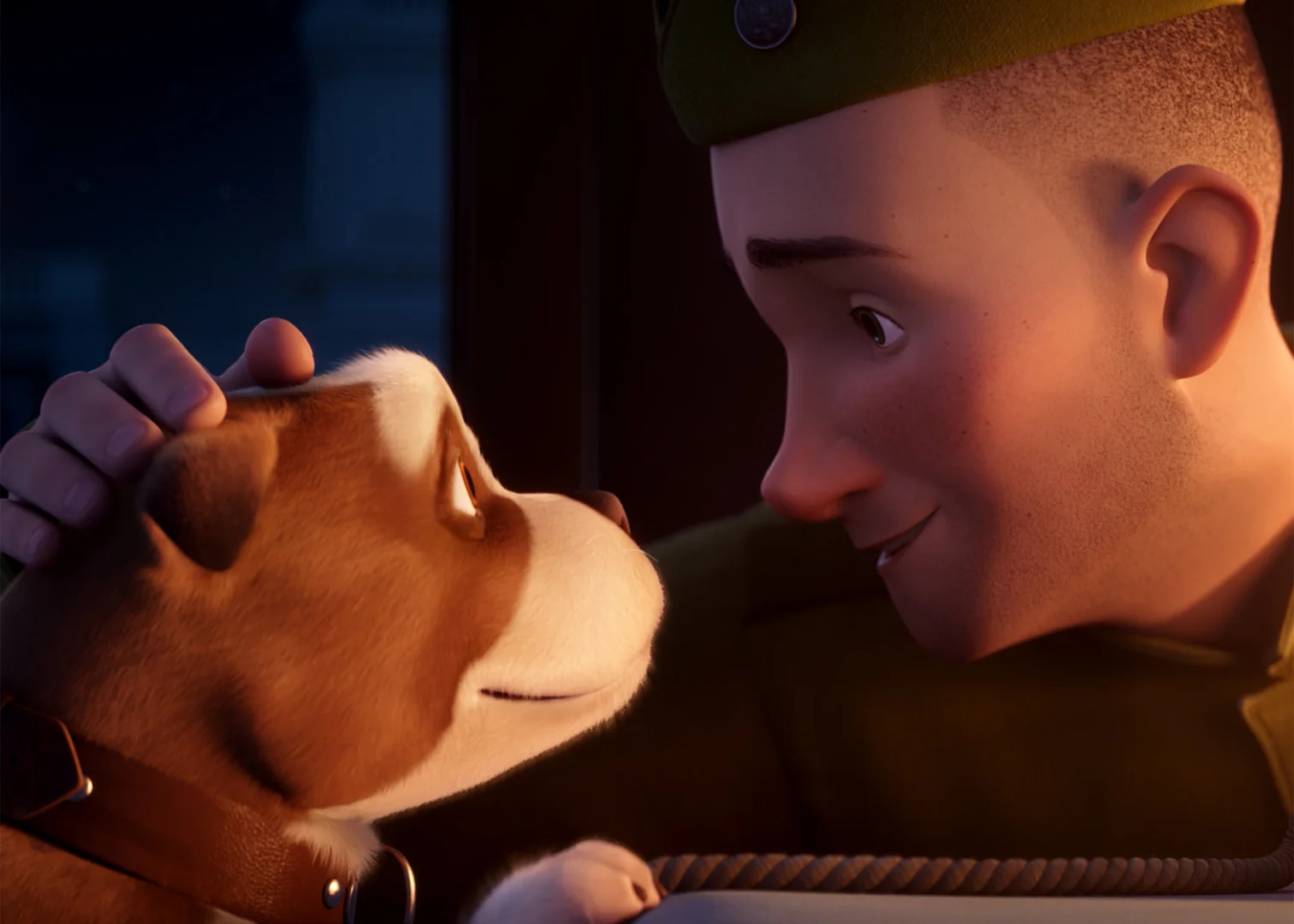
In April 1918, as audiences laughed at A Dog's Life (1918, Charlie Chaplin), a real mongrel from New Haven was taking German grenade fragments in his foreleg at Seicheprey. Sgt Stubby: An Unlikely Hero (2018, Richard Lanni) begins where Chaplin's comedy lives, in the abjection of the stray, chased from the bins with a curt "Go rifle through someone else's trash". The stump-tailed terrier wanders onto the Yale parade ground where Private Robert Conroy (Logan Lerman) is being drilled for the Western Front, and when asked whether he has found a new buddy, Conroy delivers the film's quiet thesis: "Actually, he kinda found me." It is a delicious inversion of the adoption narrative, and Lanni builds his whole emotional architecture upon it. Stubby learns to salute, stows away to France and falls in with Gaston Baptiste (Gérard Depardieu), a poilu chef with a bottle forever within reach ("Rules? What rules? This is war!"), while Robert's sister Margaret (Helena Bonham Carter) reads the war to us through his letters.
Read Full Review
UKRAINE UNDER FIRE
★★★★

UKRAINE UNDER FIRE

Jordan Campbell

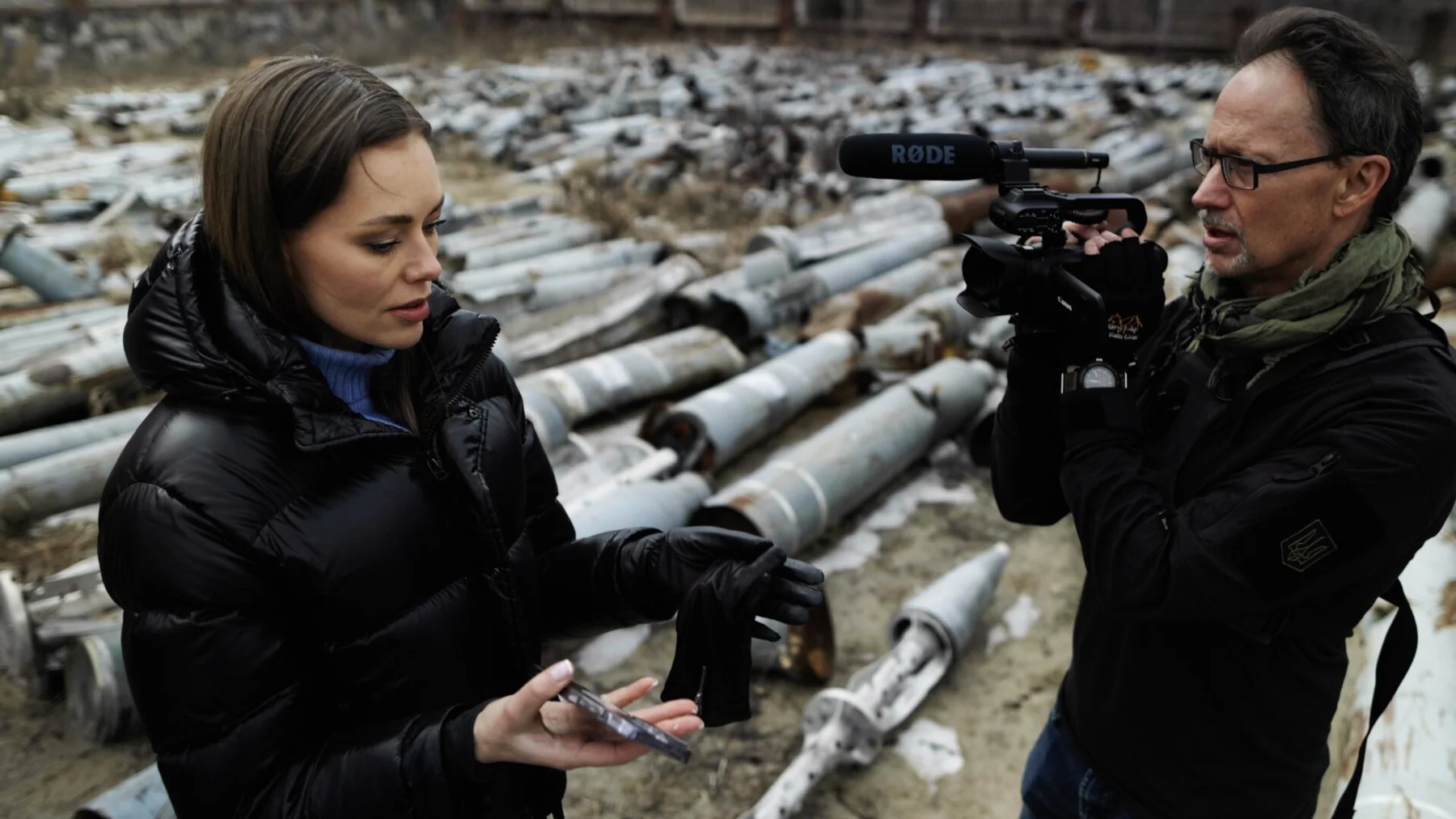
In Under Fire (1983, Roger Spottiswoode), a war photographer discovers that a single frame can tip a revolution. Four decades later, Jordan Campbell borrows the phrase for his title and quietly strips it of its Hollywood swagger, for here the journalist is not the hero but the conduit. Within its first minute, Ukraine Under Fire (2025, Jordan Campbell) tunes us into a broadcast announcing the national telemarathon, and with it Campbell locates this war where Paul Virilio insisted wars are fought: in the logistics of perception. What follows is a forty-minute double act. On one side stands Campbell, the American correspondent embedded with emergency medics in Bucha, Irpin and Borodyanka and with rescue teams evacuating the wounded and displaced from the Donbas. On the other stands Olga Butko, the Ukrainian news presenter woken on the morning of the invasion by her boyfriend's "Olga, it started", who, against her family's protests, went back to the television station. Her reasoning, "this is my time to help", is the film's quiet thesis. If the nation is, in Benedict Anderson's formulation, an imagined community, then the broadcast studio becomes its last line of defence. Campbell's confession that the invasion was "a failure of our imagination" rhymes beautifully with Olga's refusal to let her country be un-imagined.
Read Full Review
SAFE SETS - DYING TO WORK IN THE FILM INDUSTRY
★★★★

SAFE SETS - DYING TO WORK IN THE FILM INDUSTRY

Paul Heinzelmann

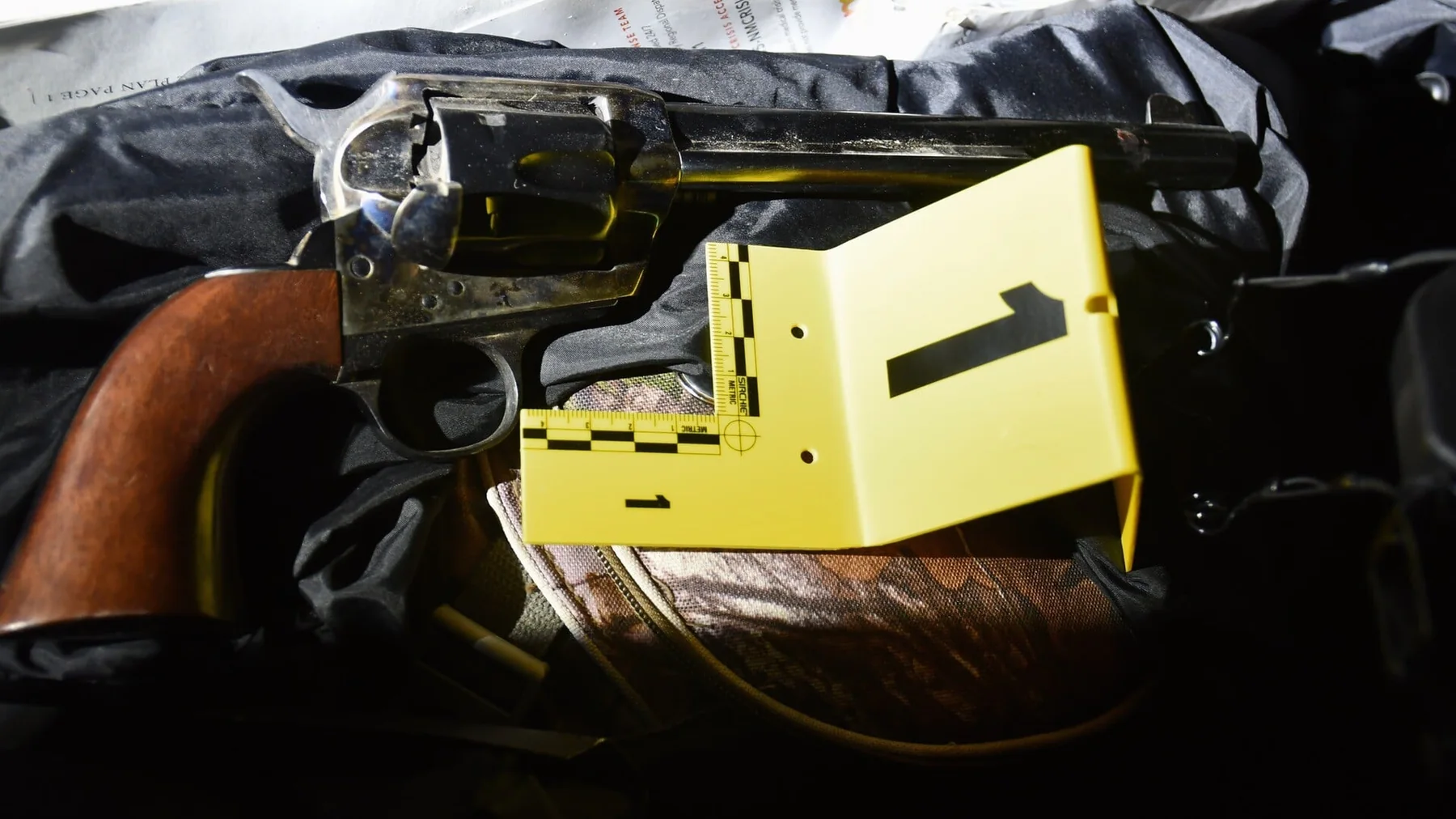
Cinema's very first film was, in effect, a labour documentary. In Workers Leaving the Lumière Factory (1895, Louis Lumière), employees stream through the gates and out of frame, and for some hundred and thirty years we have assumed they all made it home. Paul Heinzelmann, a Boston primary-care physician and first-time filmmaker, walks through the gates of what the anthropologist Hortense Powdermaker christened the "dream factory", black bag in hand, to count those who never walked back out. Safe Sets: Dying to Work in the Film Industry, co-directed with Jonathan Schwartz, opens on police bodycam footage from the set of Rust (2024, Joel Souza), where cinematographer Halyna Hutchins lost her life; a detective's flat "This is a crime scene" sets the stakes. Yet its origin myth is gloriously comic. Coaxed onto a set to treat an executive producer's earache, Heinzelmann flushes her ear as she carries on typing, until a "torpedo of wax" shoots out and she can hear again. It is the perfect parable: a doctor arrives on set, and an industry deaf for a century is finally made to listen.
Read Full Review
UTOPIC STROKES
★★★★

UTOPIC STROKES

Richard El Asmar

In the eighteenth chapter of Jeremiah, the prophet is sent down to the potter's house to watch a marred vessel patiently remade on the wheel, and to learn that whole nations are held, like wet clay, in the hand that shapes them. Richard El Asmar sends us down to the potter's house too, though his is a rambling Canadian studio-cum-sanctuary, and the hands at the wheel belong to a constellation of makers rather than a single deity. Utopic Strokes is ostensibly a documentary about the making of a pot from which the peace of Christ takes birth. In truth it is a quietly radiant study of community, inheritance and loss, its title a sly nod to Thomas More's pun on utopia as both the good place and no place at all. Our first guide is the immigrant potter who has shepherded the group show Thousand One Pots for twenty-eight years. He turns every piece upside down against the winter frost and builds, wall by narrowing wall, a modern longhouse of sculpted angels, secret doors and falling mist, where weddings, concerts and dinner parties gather. 'We are unknown potters,' he concedes, 'but if we put all together, it makes some impact.' It is the film's thesis, delivered with a shrug.
Read Full Review
GIMME MY MONEY!
★★★★

GIMME MY MONEY!

William Vigil

In Point Blank (1967, John Boorman), Lee Marvin climbs the hierarchy of a faceless syndicate wanting nothing more, and nothing less, than the money he is owed. Nearly sixty years on, William Vigil hands that ledger to a woman, and the result is Gimme My Money!, a gloriously pugnacious caper in which Jo (Marci Miller), tough, mysterious and wonderfully unknowable, has simply finished asking nicely. Vigil structures her quest as a picaresque ascent through the rungs of a criminal family tree. She pins a headphoned cousin to the pavement, traps Max (Robert Dunne) beneath a speaker at the Tiki a Go-Go, and dispatches a kitchen brigade like so many unwashed pans. Then come a strutting Willie (Tomer Oz) and a crooked cop who changes allegiance as smoothly as he changes tone, until the trail reaches the suburban sanctum of Pops himself (Raymond Barry). It is Bruce Lee's pagoda from Game of Death (1978, Robert Clouse) laid flat across tiki bars and cul-de-sacs. The characters are charismatic to a fault. Even the bumbling crew radiate a hapless, lovable vanity, whilst Miller lends Jo the cool authority of a woman who has won the argument before the first punch is thrown.
Read Full Review
AMARGO SILENCIO
★★★★

AMARGO SILENCIO

Freddy D'Elia

Somewhere in the Saharan solitude of Antoine de Saint-Exupéry's The Little Prince, a fox confides that what matters most is invisible to the eye. It is a lesson the patriarch of Amargo Silencio never learns, and one its smallest character seems to have been born knowing. Freddy D'Elia's remarkably assured directorial debut opens on Anastasia (Lorena Arosemena) packing her make-up and her Bible to visit her elder sons, Arturo and Matías, now living with their grandparents. She leaves the asthmatic Federico (Andrés Elías Marín) with his father, Antonio (Juanxo Villaverde), a lawyer perpetually swamped at the office. 'No se me va a olvidar,' Antonio promises about the boy's medicine. Reader, it is not the only promise he breaks. What follows is a domestic Kammerspiel of devastating economy, a father-son study in toxic masculinity carved with a scalpel rather than a sledgehammer. It is anchored by a child performance of startling truth: watch how much Andrés Elías Marín packs into one grudging 'MjM' when his father fishes for complicity. A single syllable, an entire thesis.
Read Full Review
IMPACT - THE STORY OF OSHANE DREWS
★★★★

IMPACT - THE STORY OF OSHANE DREWS

Sebastian Thomas Brune

Every great sports film eventually stops being about the ball. In Rocky (1976, John G. Avildsen) it becomes a flight of museum steps; in Hoop Dreams (1994, Steve James) a single free throw carries the hopes of an entire family. Sebastian Thomas Brune needs a mere five minutes and seventeen seconds for Impact – The Story of Oshane Drews to make a basketball carry the full weight of a life, and he does so with a camera that frankly has no business being this good. Let us dispense with diplomacy: the cinematography is absolutely insane. Doubling as his own director of photography, Brune does not film basketball so much as play it, his lens crashing the boards, hanging in the air on the jump and landing with every ounce of the body's weight. Laura U. Marks would call this haptic visuality, images we seem to touch rather than merely see, and we leave with aching calves to prove it. Not since Zidane: A 21st Century Portrait (2006, Douglas Gordon and Philippe Parreno) has a camera devoted itself so totally to a single athlete. The court crackles with the sweaty, kinetic electricity of Challengers (2024, Luca Guadagnino), achieved here on a budget that would barely cover that film's catering.
Read Full Review
FORGOTTEN LETTERS
★★★★

FORGOTTEN LETTERS

Shiva Boloorian

In his seminar on Edgar Allan Poe's "The Purloined Letter", Jacques Lacan famously concluded that a letter always arrives at its destination. Jacques Derrida, never one to let a Lacanian certainty go unchallenged, answered with destinerrance: the haunting possibility that any letter might wander forever, undelivered. Shiva Boloorian's Forgotten Letters stages that very quarrel within four quiet walls and, with devastating tenderness, proves them both right. Goli (Fahime Mojtahedi), whose name grows from the Persian gol, "flower", lives by the small rituals of the day: the walk to the door, the envelope received, the needles picked up again. The post keeps bringing letters and photographs she is certain belong to someone else. The misdelivered tiffin of Ritesh Batra's The Lunchbox (2013) strays into a stranger's hands and finds love there, but these letters have reached precisely the right address. It is the recipient who has gone astray. The forgotten letters of the title are not only those in the envelope but also the letters of her own name.
Read Full Review
THE MINERS ROUTES
★★★½

THE MINERS ROUTES

Iryna Melnyk Novak

In Book VII of Plato's Republic, prisoners shackled inside a cave mistake flickering shadows for the whole of reality, until one of them is dragged up the steep ascent into the blinding glory of the sun. Iryna Melnyk Novak's The Miners Routes (2025) begins precisely where that allegory ends. "After long years digging in the depths of the earth," confesses its voiceover, "we discovered that the best lay outside." In seventy-nine seconds, Melnyk Novak stages a collective anabasis, an ascent from the underworld after a century-long katabasis, for the people of Andorra, the Teruel mining territory whose livelihood once lay almost entirely beneath its own feet. There are no characters in the conventional sense. The protagonist is the land itself, and its narrator is what Michel Chion might call an acousmêtre, a disembodied voice that seems to rise not from a person but from the strata, the wind and the scars of the terrain. It is a commissioned promotional film, yes, but one that thinks, feels and, quite literally, has a pulse.
Read Full Review
FAMILIAR STRANGER
★★★★

FAMILIAR STRANGER

Hendric Weiner

Fremdvertraut. Strange-familiar. Hendric Weiner's German title is less a name than a thesis, a contemporary gloss on Freud's das Unheimliche, in which the homely and the uncanny turn out to be the same room seen in a different light. His eighteen-minute chamber piece opens the way cinema has trained us to dread: a knock at a lonely door, a young woman with a dead car, a broken phone and an urgent need for the loo. We brace for the borrowed eggs of Funny Games (1997, Michael Haneke). What crosses the threshold instead is grief wearing a stranger's face. Michael's twelve-year-old daughter Marla was taken twenty-four years ago today. His visitor, Laura, may be a grifter, an over-invested religious studies student, or Marla herself, returned. Weiner sustains Tzvetan Todorov's fantastic, that delicious hesitation between rational and supernatural explanation, right to the final frame, and he does so at twenty-four on a declared budget of precisely nothing.
Read Full Review
IRAN - THE GREAT GAME
★★★★

IRAN - THE GREAT GAME

Igor Lopatonok

High above Baghdad, a Reaper drone circles unseen. Five days later, Flight PS752 climbs for barely two minutes into the January darkness over Tehran before two surface-to-air missiles extinguish 176 lives. Igor Lopatonok opens Iran: The Great Game with this double catastrophe, and it is a masterstroke of narrative architecture. The downed airliner becomes the film's governing synecdoche, a single wound through which a century of empire, oil and intrigue bleeds into view. Lopatonok places PS752 alongside its tragic forebears, from Korean Air 007 and Iran Air 655 to MH17, to pose the question that animates all 114 minutes: how does catastrophe become a narrative weapon, and who gets to wield it? The film then performs a vertiginous historical dolly-back to Zoroaster, Cyrus and the fall of Darius III. From there it marches through the Great Game, the 1953 coup, the 1979 Revolution and the hostage crisis to the strikes of June 2025. Standing sentinel over it all is the Cypress of Abarkuh, a tree that has outlived every empire around it and the film's quiet emblem of a civilisation that bends but never breaks.
Read Full Review
LITTLE MONSTER
★★★★

LITTLE MONSTER

Alex Cao

In Greek myth, Persephone is bound to the underworld for the simple crime of eating a few pomegranate seeds; what you consume in Hades, it turns out, consumes you back. Alex Cao's Little Monster opens on a black screen and a confession, 'There is a little monster living inside of me', before a hesitant hand reaches for a door bleeding red light and we are delivered, Persephone-like, into a nocturnal underworld. Beyond it, a figure in a blood-soaked shirt crouches over a body on a bed, gorging, until it senses our gaze and lunges at the lens. It is as arresting a cold open as I have seen from a student filmmaker, setting the grammar for all that follows: gritty, macabre, unapologetically corporeal. Waking, Jordan offers his departing hook-up Jessie the strangled etiquette of the situationship ('It's not like we're… it's cool, we're cool'), and the moment the door clicks shut, the night opens its jaws. The cinematography, by Yuping Zeng with Cao herself, is excellent. It stretches a 2:1 frame across one cramped bedroom like a coffin lid, leaving just enough darkness at its edges for something to crawl out of.
Read Full Review
BEYOND THE HORIZON
★★★★

BEYOND THE HORIZON

James Peter Rowat

Daniel Defoe's castaway named his companion after the day on which he found him. Zoe Stephens also landed on a Friday, on what should have been a three-day hop from Fiji to Tonga, and the Pacific would not release her for five hundred and thirty-one days. James Peter Rowat opens Beyond The Horizon with a prologue of near-comic dramatic irony. Zoe is a devoted traveller who meets every 'why do you travel so much?' with 'why don't you?'. She has just returned to Beijing from guiding tours into North Korea, a country she chose precisely because the media had taught her to fear it. Over dinner, a friend asks why nobody is wearing masks; Corona, she recalls, was still just a beer. By the time a Tongan taxi driver greets her with 'Fiji, COVID, three cases', the world is folding shut behind her. New Zealand's border closes at midnight and Fiji's flights are reserved for Fijians. Stranded Germans, Brits, French and Swiss drift around the airport like the chorus of The Terminal (2004, Steven Spielberg).
Read Full Review
HORSES
★★★★

HORSES

Daniel Belton · Good Company Arts

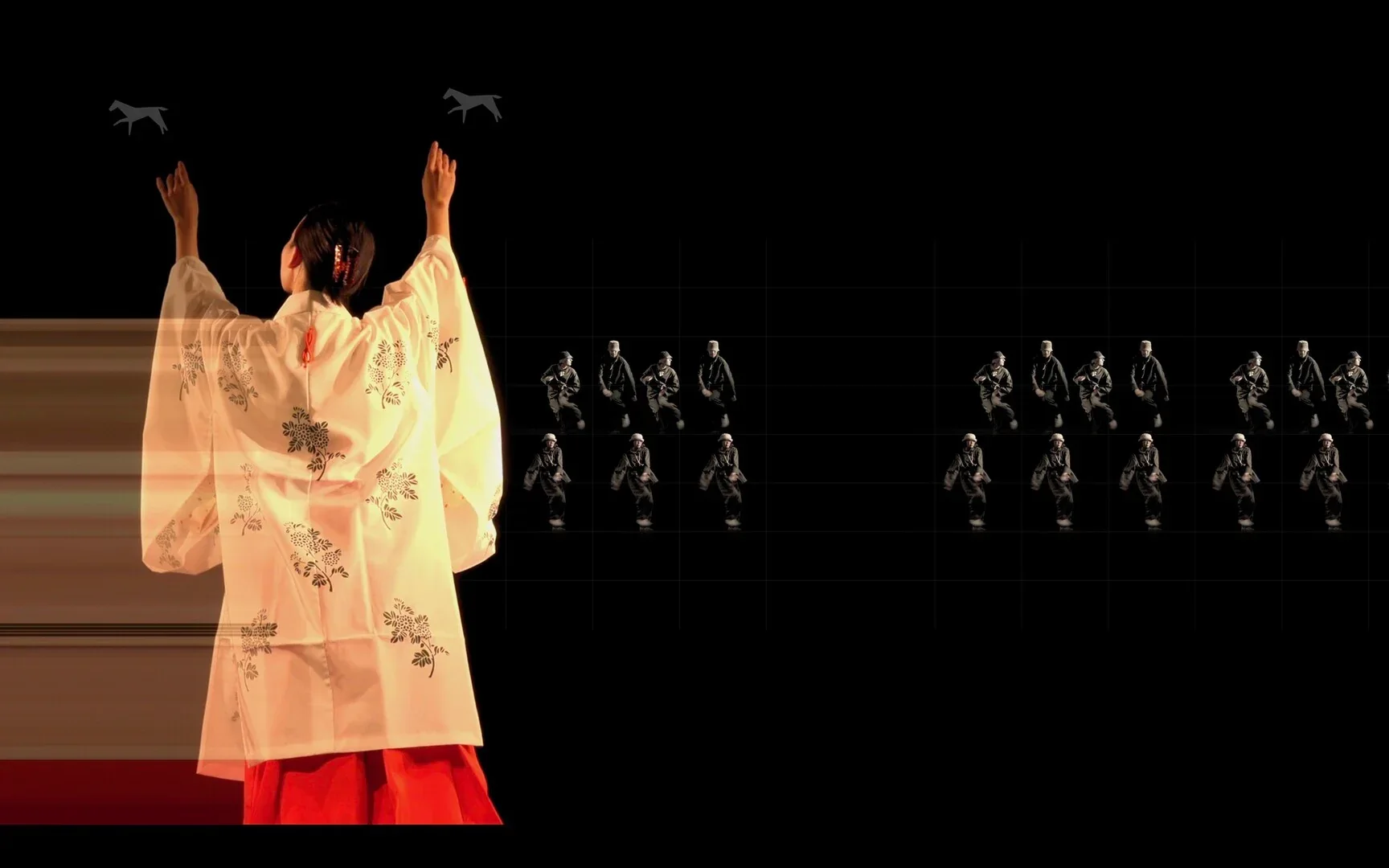
In 1878, Eadweard Muybridge lined a Californian racetrack with cameras to settle a question that had long nagged at Leland Stanford: does a galloping horse ever leave the ground entirely? It does, for one suspended instant, and in that airborne gap cinema was born. A century and a half later, Daniel Belton leads us back to the stable where it all began. Horses, the final instalment of Good Company Arts' Asia-Pacific trilogy, unfolds across eight and a half minutes of obsidian void. A single dancer is split, cloned and multiplied until one body becomes a chorus, while spectral wavelengths bleed across the black like light caught mid-refraction, mercifully nothing like the forty-five-minute zoom of Wavelength (1967, Michael Snow). Equal parts experimental film and dance film, it is a choreographic séance. Tsukushi-Mai artist Nao Kamei, a Tōkyō–Aotearoa hip hop crew, Airu Matsuda and Chikako Arai are summoned, sorted and set loose to herald the Fire Horse year of 2026.
Read Full Review
TANGO'S BLUES
★★★★

TANGO'S BLUES

Víctor Peceño

Enrique Santos Discépolo once defined tango as a sad thought that is danced, and rarely has that aphorism found so faithful, or so compact, a cinematic incarnation as Víctor Peceño's Tango's Blues. In three and a half minutes, Peceño stages the oldest heartbreak in the repertoire: two tango dancers part ways, and he is left dreaming of dancing with her once more. The film understands that the end of a love is, above all, a problem of the body. Freud separated the mourner, who patiently withdraws his libido from the lost object, from the melancholic, who swallows it whole. Nicolas Abraham and Maria Torok would later call this incorporation: the beloved is entombed within an intrapsychic crypt where she can neither live nor die. Peceño's protagonist is a melancholic of the purest strain. His partner is preserved not in thought but in proprioception, in the phantom pressure of an abrazo his arms refuse to forget. Tango is, after all, the one dance built upon two bodies sharing a single axis, so to lose your partner is to lose your centre of gravity. This is why the film matters today. Byung-Chul Han warns that eros is dying of narcissistic sameness, with the Other swiped away rather than encountered, and Zygmunt Bauman diagnosed our liquid love, bonds designed to dissolve without residue. Tango's Blues answers both with a gloriously unfashionable proposition: the Other is irreplaceable, and grief is simply the receipt for having truly touched someone.
Read Full Review
THE DAM
★★★★

THE DAM

Nils Martenet

A young Jean-Luc Godard once worked on the construction of the Grande Dixence dam in the Valais and turned the experience into his first film, Opération 'Béton' (Jean-Luc Godard, 1955), a hymn to poured concrete. Some seventy years on, Valais filmmaker Nils Martenet returns to a wall of Grande Dixence proportions to ask what all that concrete has been holding back. His camera climbs towards it the way the opening of The Shining (Stanley Kubrick, 1980) climbs to the Overlook. An overhead shot turns the hairpin road into a serpent coiling through frosted larches, a lone car crawling along it like a thought the mind cannot stop returning to. We meet Claire, or the woman she has become, behind a windscreen that ghosts the forest across her face; through the glass the dam looms between the mountains with the rear-view mirror hanging over it, the past suspended above the road ahead. THE DAM is also the nightclub where she was drugged and assaulted, and on the eve of her attacker's arrest she must choose whether to release the flood as vengeance or hold it and trust the silent justice due at dawn.
Read Full Review
SAUDADE
★★★★

SAUDADE

Alfredo E D Gomes

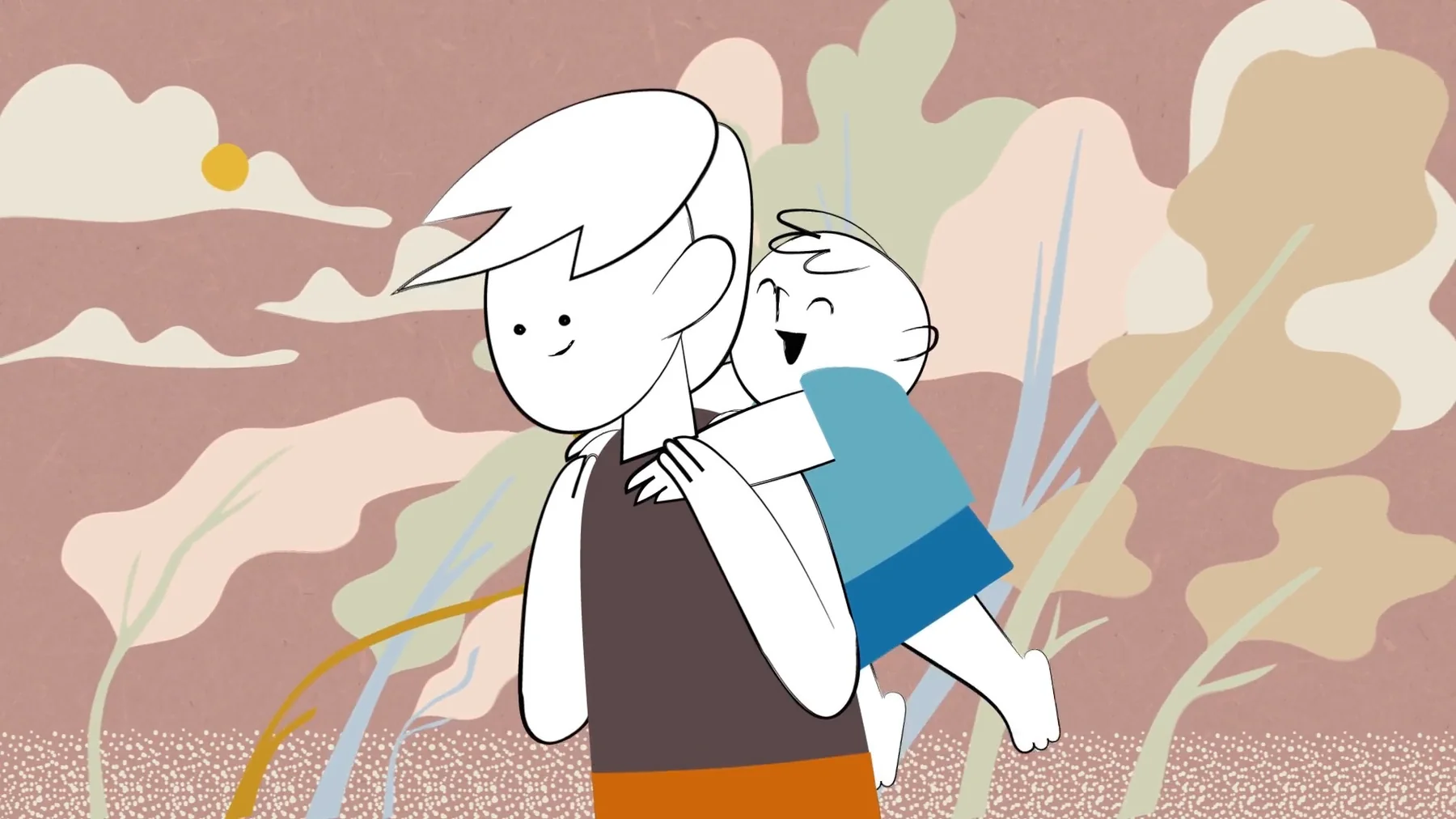
The Portuguese language guards a word that no dictionary has ever quite managed to translate. Saudade, wrote the seventeenth-century writer Francisco Manuel de Melo, is a blessing one suffers and an affliction one savours, and when Brazil set that ache to music in 'Chega de Saudade' (1958), bossa nova was born from the very longing its title begged to be rid of. Alfredo Dias Gomes's Saudade (2021), a music-led 2D animation, inherits both legacies: it is saudade rendered as image and saudade rendered as rhythm. Two brothers grow up side by side; the younger falls under music's spell when a member of an orchestra draws him in, his parents lead him away, and then fate, in the banal and terrifying guise of a fever, takes him altogether. What Dias Gomes understands, and what makes his film so urgent today, is that the grief at its centre belongs most acutely to the surviving child. Bereaved siblings have long been called the 'forgotten mourners', and Kenneth Doka's notion of disenfranchised grief, sorrow that society neither sees nor sanctions, finds a heartbreaking figure in the older boy who must ask after his brother before anyone thinks to tell him.
Read Full Review
INSIDE THE BIRDHOUSE
★★★★

INSIDE THE BIRDHOUSE

Helen Hines

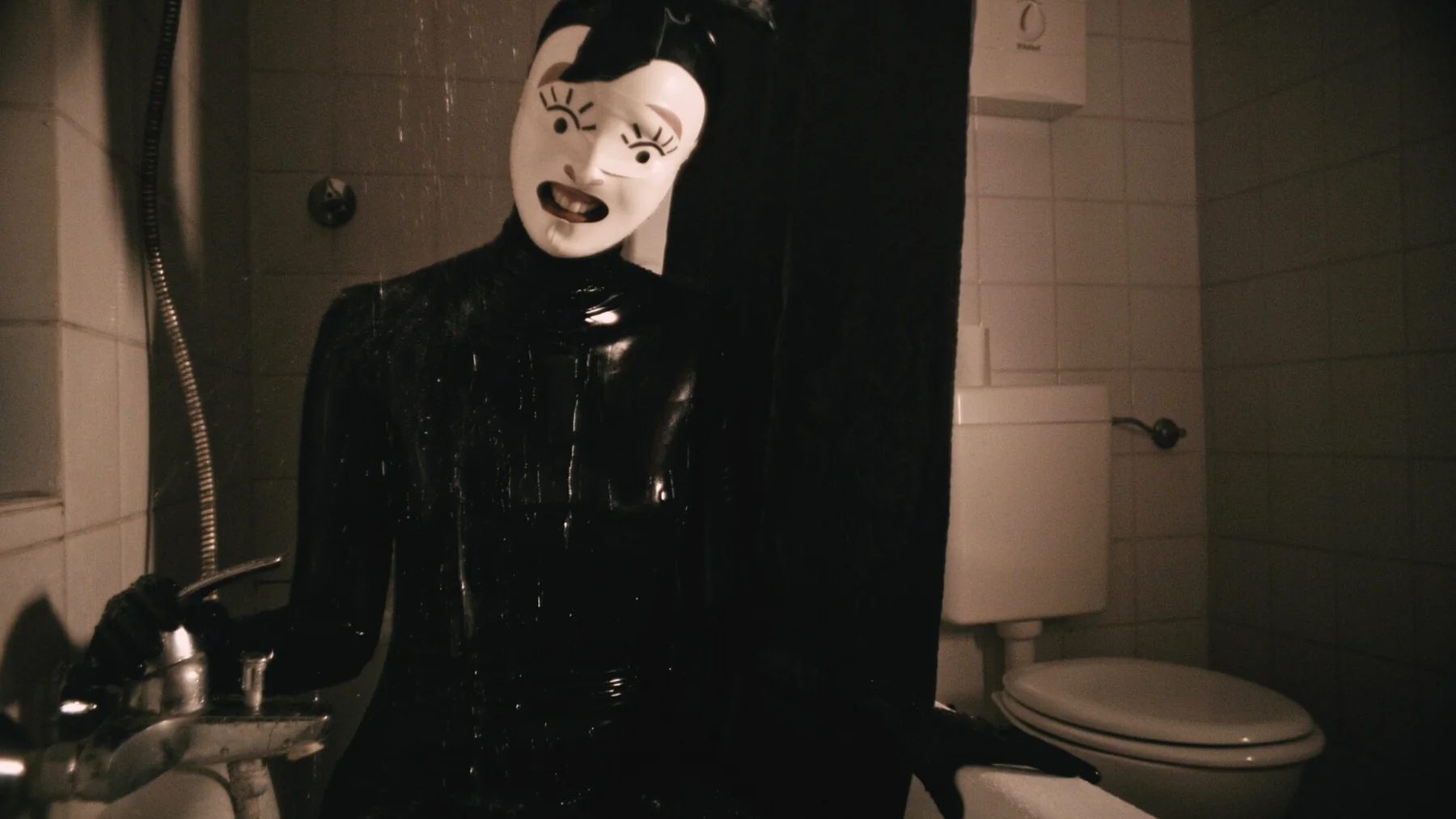
In the winter of 1923, an ailing Franz Kafka sat in a Berlin room and wrote The Burrow, the unfinished tale of a nameless creature who builds itself the perfect underground fortress, only to be driven to the brink by a faint, ceaseless noise it can neither locate nor silence. A century later, somewhere above the din of a Berlin crossroads, Helen Hines has built a burrow of her own, this one hanging from the branch of an old tree, and Inside the Birdhouse (2025) locks us inside it for nine and a half minutes. Within, a creature given grotesque life by Natascha Schoenaich haunts a cramped interior it shares with a mask and a sex doll that are among the creepiest objects I have encountered all season. Not much happens. We simply inhabit the space alongside this thing, and that, it turns out, is the most genuinely disturbing proposition of all.
Read Full Review
CITY IN OBSERVATION
★★★★

CITY IN OBSERVATION

Audrey Whiteford-Woods

As a young man, Jacques Lacan spent a day at sea with Breton fishermen, and one of them, Petit-Jean, pointed at a sardine tin glinting on the waves. 'You see that tin?' he laughed. 'Well, it doesn't see you.' Lacan later decided the fisherman had it backwards, and that the gaze lives out there among things rather than safely behind our eyes. Audrey Whiteford-Woods's City in Observation is built on Petit-Jean's joke turned inside out. A young researcher drifts through a city the film is in no hurry to name (though its trams and the globe-crowned lamp standards of what looks very much like Ban Jelačić Square give Zagreb away), and the premise is that this city has been watching her, and all of us, long before she thought to look back: a silent witness that neither speaks nor judges but simply listens. Even the title plays the game. The Croatian Promatrajući Grad can be parsed as 'observing the city' or as 'the observing city', so subject and object trade places before the first frame. Whiteford-Woods's words reach us through translation, voiced in part by her translator Ivo Žarković, and the language repays the journey: the narration reads the city's age, its godine, in the rings of a tree trunk, its godovi, two Croatian words that grow from a single root. It is the right first image for a film less about looking than about surfaces that remember: stone, celluloid and, most unexpectedly, sticky notes.
Read Full Review
IAN
★★★★

IAN

Gabriel Jiménez-Ontiveros

Alan Turing's imitation game, so often forgotten in its original form, began not with a computer but with an interrogator trying to tell a man from a woman. Gabriel Jiménez-Ontiveros's IAN behaves as though it knows the footnote. In 2031, Angel, a thirty-something with prematurely gray hair and worn features, comes home to a luxury penthouse and empties a glass in one gulp. Then he confesses to a blue pearl on his television that he understands neither "these young women" nor the machine he is talking to: "I don't understand how you work, nor why." From that drunken debrief the script builds a chamber two-hander in which one of the hands is a pearl of light, in the lineage of My Dinner with Andre and the sentient-bomb philosophy of Carpenter's Dark Star. Its dystopia is tastefully furnished. A Supreme Council rules, a Verified Encyclopedia decides what is true, and an atmospheric recovery plan is announced as complete while the window frames a gray horizon. The single exterior, a "Beehive of Floors," winks at Cela's censored La colmena. A precise colour grammar runs throughout: blue for compliance, red for prohibition, green for permission, beginning with a lock turning from red to green. The script is also very funny, never more so than when IAN, privacy settings off, advises: "Make sure you are alone or among your nearest and dearest before you continue talking."
Read Full Review
SICILIAN WEIRD TALE
★★★★

SICILIAN WEIRD TALE

Andrea Indovino

In Palermo's Kalsa quarter, legend has it, a young woman beheaded her unfaithful Moorish lover and grew basil in his skull, which is why every testa di moro on a Sicilian balcony is really a decapitation dressed up as décor. Andrea Indovino sets a ring of those planters around a villa fountain and, sixty pages later, grafts a living severed head onto a headless black horse and sends it to lead the island's dead into the dawn. That is the measure of this writer: he hides his crimes among the geraniums and trusts us to come back for them. Sicilian Weird Tale is a triptych in the lineage of Bava's Black Sabbath and the Tavianis' Kaos, but braided like Pulp Fiction. A sand-crusted wedding ring rolls from one story into another, a slaughtered ewe walks from a dying farm onto a mafioso's butcher block ("We recognise it"), and two crooks die in Part Two before we have properly met them in Part Three. Mark Fisher called the weird "that which does not belong"; Indovino makes it the island's oldest native.
Read Full Review
LA HACIENDA
★★★★

LA HACIENDA

Patricia Fox

Around 1910, on the eve of the Revolution, José Guadalupe Posada etched a grinning female skeleton in a plumed European hat, a lampoon of social climbers who disowned their indigenous roots while the country starved. Diego Rivera later named her La Catrina. La Hacienda knows this genealogy in its bones. Its heroine, Katrina, is a blonde American who arrives at her parents' crumbling sisal estate on the first of November and is hailed by a bowing labourer as "Katrina, Goddess of the Underworld..." She and her Puerto Rican husband Emmanuel carry a grief the script withholds with real discipline: six months earlier they lost a daughter at eight months' gestation. We learn it not from Katrina but from her mother, blurted to dinner guests, and Katrina's "My mother thinks if you don't mention it, I don't grieve about it" captures the whole family in one line. Freud's melancholic, who swallows the lost object whole rather than mourning it, has rarely been dramatised so precisely. Katrina chases a phantom infant's cry from room to room as it recedes, always one doorway further off, until she collapses. Behind the chapel sit two graves with "No names," a crypt in Abraham and Torok's sense: a loss left unnamed and unmourned that haunts the generations after it. Diego the foreman supplies the cosmology's law: "The spirits of people who die violently feed off the strong emotions of the living." Emmanuel, eyeing his in-laws, replies, "I know people still alive who are the same way."
Read Full Review
THE WALK ON
★★★★

THE WALK ON

Billy Mitaritonna

Proust had his madeleine; Billy Mitaritonna has a taxi horn. The Walk On opens in 2017 outside Penn Station, with a forty-five-year-old Billy barking "Fifty-Second and Tenth" at a cab driver. Then a HONK-HONK-HONK dissolves the gridlock into 1985 Queens, where a thirteen-year-old dribbles beneath a Chris Mullin poster, muttering "Gotta keep the rhythm." It is a memory play wearing a sports film's warm-up jacket. Adapted from Mitaritonna's memoir Last of the Redmen, it follows a kid who never plays a minute of high school ball. He takes a Division III detour to "Portland, MAINE," survives a foreclosure notice and a lost year of bar stools, and finally earns a walk-on spot at St. John's and his first Division I point at Madison Square Garden. His tryouts fall a fortnight after Rudy hit cinemas. But where Rudy kneels at Notre Dame, this script worships at a backyard picnic table beneath a crooked rim. There Angelo, an ex-Washington General turned cab driver, teaches his son to "never give up on something, or someone, you love." The basketball is the alibi. The father is the story.
Read Full Review
LIONS OF FLORENCE
★★★★

LIONS OF FLORENCE

Ken White

"He who, without Fame, burns his life to waste leaves no more vestige of himself on earth than wind-blown smoke, or foam upon the water." Ken White opens Lions of Florence with Dante's warning and then spends a hundred pages watching two of history's most insecure geniuses take it far too literally. In 1503 the Florentine Republic, fronted by the pear-nibbling Gonfaloniere Piero Soderini and engineered by his finger-gnawing Second Chancellor Niccolò Machiavelli, commissions Leonardo da Vinci and Michelangelo Buonarroti to paint rival battle frescoes side by side in the Sala Grande of the Palazzo Vecchio. White, with gloriously impish nerve, stages the affair as a heavyweight prize-fight with Machiavelli as its Don King. A present-day frame shows the art diagnostician Maurizio Seracini and the octogenarian scholar Carlo Pedretti probing Vasari's later fresco behind a tiny green flag inscribed "Cerca Trova." That frame turns the screenplay into an archaeology of absence, a dig for a masterpiece that survives mostly as rumour. White's world-building is a feast for the senses and for the sordid. Lions pace in golden cages while soldiers force a prisoner to kiss the stone rump of the city's marble lion, the gutters outside the Hospital of the Dyers run blue, green and crimson, and a tavern dart scoreboard is marked "Mic" and "Leo," its score never budging from 0–0. Picture Amadeus by way of Ridley Scott's The Duellists, laced with the cheeky anachronism of A Knight's Tale and Shakespeare in Love and warmed by the ancestral glow of Carol Reed's The Agony and the Ecstasy. That is White's register: bawdy, erudite and quietly heartbroken.
Read Full Review
THE RED ZONE
★★★★

THE RED ZONE

Terry Luke Podnar

In Plutarch's most stubborn riddle, the Ship of Theseus is preserved in the Athenian harbour by replacing each rotting plank until no original timber remains, and philosophers have argued ever since over whether the vessel at anchor is still the hero's ship. Terry Luke Podnar's The Red Zone carries that paradox out of the harbour and onto the gridiron. Robert Pettibone, the AFL's scarred, silent, helmet-crushing phenomenon, is a man rebuilt plank by plank, or rather cloned limb by cloned limb. Dr. Meng will eventually describe him, with chilling tenderness, as "a transplant of yourself." The story opens as a deceptively familiar sports-conspiracy yarn about a rookie phenom benched the moment the Hawks "safely cover the spread." It then mutates with exhilarating confidence into body horror, war-trauma ghost story, newsroom procedural and, most surprisingly, screwball romance. Picture North Dallas Forty spliced with Frankenstein, filtered through the surveillance paranoia of The Truman Show and the implanted memories of Blade Runner. Podnar's world-building is meticulous in its unease. There is a mansion of "basic furniture, and the cameras. Clinical," a grilled window watched "as if through bars in a prison gate," and a monitoring room where every lens feeds a single bank of screens. In the stands sits the script's thesis in one image: a Korean man dressed entirely in black except for a mint green pocket square, ignoring the scoreboard to study only the fans "melting in the palm of Pettibone's hands." The product was never the touchdown; it was the hunger for it. Even the title earns its double meaning. The red zone is football's final twenty yards, and it is also the colour into which everything here slowly bleeds, from turf stained by phantom gunfire to that pocket square soaked in Pettibone's own blood.
Read Full Review
OCCAM'S BEARD
★★★★½

OCCAM'S BEARD

David Ezell

William of Ockham gave philosophy its razor, the principle that entities must not be multiplied beyond necessity. David Ezell, with gleeful mischief, hands us everything the blade misses. Occam's Beard is a taut, twenty-five-page Manhattan chamber piece in which the simplest explanation and the most monstrous one sit across from each other in leather club chairs and refuse to blink. Beneath the Chrysler Building, a well-dressed young man clutching a small box of Valentine's candy hurries down 41st Street. He glances over his shoulder and pauses only to check his hair in an electronics-store window, where a giant screen shows Donald Trump captioned "DON'T BELIEVE WHAT YOU SEE." A Melania Trump epigraph, "Be cautious about what you believe," has already laid the epistemological table. He storms into his psychiatrist's office mid-ultimatum ("Look I think that it, well it is time for you to...") only to be ambushed by a cake blazing with a "3" and a "0." JP Ellison, once the teen idol of a sitcom wonderfully titled Family (re)Planning, is turning thirty. Dr. Liam Fallows, the faintly English analyst who has treated him for a quarter-century, serves the cake on ceramics glazed for a certain Maribel's quinceañera and coaxes him into a "big boy" bite. JP, a yellow party hat tied tautly to his head, finally opens his mouth "like a baby bird." Billie Holiday's ravaged 1958 recording of "You've Changed" scores the credits, and rarely has a needle drop doubled so neatly as a diagnosis. Within minutes JP will accuse Liam of being an impostor, a mere "replacement," and we are plunged into Capgras delusion, the rare psychosis in which a beloved face is recognised while its owner is felt to have been swapped. Ezell stages it as a duel of epistemologies in the lineage of Sleuth and Who's Afraid of Virginia Woolf?, with the paranoid spores of Invasion of the Body Snatchers and the shapeshifting-carer vertigo of Florian Zeller's The Father drifting through the air vents. Sharpest of all is his mise en abyme. JP's grievance of the day is that his agent never submitted him for Equus, Peter Shaffer's play about a psychiatrist who suspects that curing his teenage patient means amputating the boy's capacity for worship. That is precisely the bargain Liam and JP have been negotiating for twenty-five years.
Read Full Review
QUESTWALKER - REVEREND'S JOURNEY
★★★★

QUESTWALKER - REVEREND'S JOURNEY

Dalton C Crawford

Somewhere between Kung Fu's wandering Shaolin monk and the cloud-surfing caprice of Journey to the West, Dalton Chase Crawford sends his Reverend Walker down a sun-dappled road with a letter in his pocket and an apology on his lips. Questwalker: Reverend's Journey opens in Dragons Rest, a hundred-soul farming hamlet singing glory unto the Heavenly Host. Walker interrupts the sermon: tall, Black, built like a monastery door, round spectacles catching the light, stammering "Uh... Sorry. I didn't mean to..." He is a giant who arrives as an interruption and leaves as a benediction. The world-building is economical yet rich. There is a planet called Typhon, a nation called Eden, a Kinsday named for Lord Kin, and gods whose seats are won by duel, and a stole tipped with weighted scales tells us Themia is Themis in a cassock. Read Wusej, the real name of Walker's adopted brother Shepard, backwards, and a familiar Galilean steps out of the mirror. This is the stranger-comes-to-town Western of Shane and High Plains Drifter, inverted. Eastwood brought vengeance to Lago; Walker brings forgiveness, a far more dangerous cargo.
Read Full Review
LUPAE
★★★★

LUPAE

Edris Caige

In Latin, lupa means she-wolf and, in the less polite registers of the Roman street, a prostitute. The brothel was the lupanar, the wolves' den, and Rome itself was founded at the teat of a predator who chose to suckle Romulus and Remus rather than devour them. LUPAE builds an entire dynasty on that double meaning. Seven generations of women serve France as executioner, coquette, cross-dressed soldier, cavalry rider, ordnance sergeant, wartime volunteer and machine-gunner, from Robespierre's Terror to the siege of An Loc, and each is summoned from the same Southwestern farmhouse by a sovereign's sealed letter and a sack of coin. Imagine Sally Potter's Orlando passed through the generations of One Hundred Years of Solitude, with the history-crashing impudence of Forrest Gump and Little Big Man. Better still, imagine the Sanson dynasty of hereditary executioners reimagined as a matriarchy. The thesis arrives in the very first scene with a confidence many veterans lack. Beaulah, braided and blood-trailed in a white summer dress, is decapitating chickens when Mother, suspecting idleness, asks "Then you will not mind if I count heads?" and lines four windowsills with the evidence. "Seventy." "Seventy." It is a joke, a character beat and a prophecy at once, because heads will soon be counted by the basket. Better still, the family's soapy, bloody wash-water spills from the trough, down the stones and the hill to the road. There it halts a gilded black-and-red carriage and draws from behind its curtain a single gloved remark: "Jubilation indeed." The State arrives like a wolf following a blood trail, and the family puppy points at the door before anyone hears the knock. Voltaire closed Candide by advising us to cultivate our garden. Robespierre, hiring Beaulah "under the guise as a Royal Gardener," took him rather alarmingly at his word.
Read Full Review
IN THE VALLEY OF HOOPS
★★★★

IN THE VALLEY OF HOOPS

Ben Hopwood

"To begin at the beginning," Alice tells Jacob outside the Town Hall dance, and with those five borrowed words Benjamin Thomas Hopwood shows his hand: In The Valley of Hoops is a basketball movie dreaming it is Under Milk Wood. Dylan Thomas is smuggled through the script like contraband beneath a roof-rack tarpaulin. Tony muses that "We are not wholly bad or good, who live our lives under Llandrindod," Tom insists the sun wipe his shoes before he's let in, and Dolores invites a giant to "shipwreck in my thighs," until the spa town becomes a Llareggub of hardwood. Its residents include a Little John and a Big John, two men who merely look like twins feuding over brown versus red sauce, and an eight-year-old commentator who always thought a netless rim "was somewhere for pigeons to sit." Into this chorus coasts a rusty yellow Beetle carrying Jacob Klinc, a 7'2" Ukrainian Greek-League MVP in hiding, his fifteen-year-old point-guard son Eli, a burgundy container whose label we can't quite read, and a fuel gauge that is "completely empty," which is Hopwood's first and most honest metaphor. The architecture is Hoosiers, and the sorcery belongs to Local Hero and The Englishman Who Went Up a Hill But Came Down a Mountain. The world-building, though, is Hopwood's own, and it is meticulous, with every throwaway becoming a load-bearing beam. Charlie's paper fadeaway falls short ("It'll go in one of these days"), Big John bricks a balled-up parking ticket on a "Buzzer Beater," Shaun sneers "You would if you lot even had a home court," and Dale orders Mickey to "get yourself a job and then you can call the shots" ("I'm eight"). Every one of those cheques is cashed by the final buzzer. Even the opening black screen of squeaks, bounces and a solitary breath recurs as a sonic leitmotif on the team coach, migrating from the trigger of Jacob's panic attack to the heartbeat of his healing.
Read Full Review